Why a Dry Suit Certification Will Make You a Better Diver

Scuba Diving

Why a Dry Suit Certification Will Make You a Better Diver

Written by Scuba Turtles   |   18 March 2026

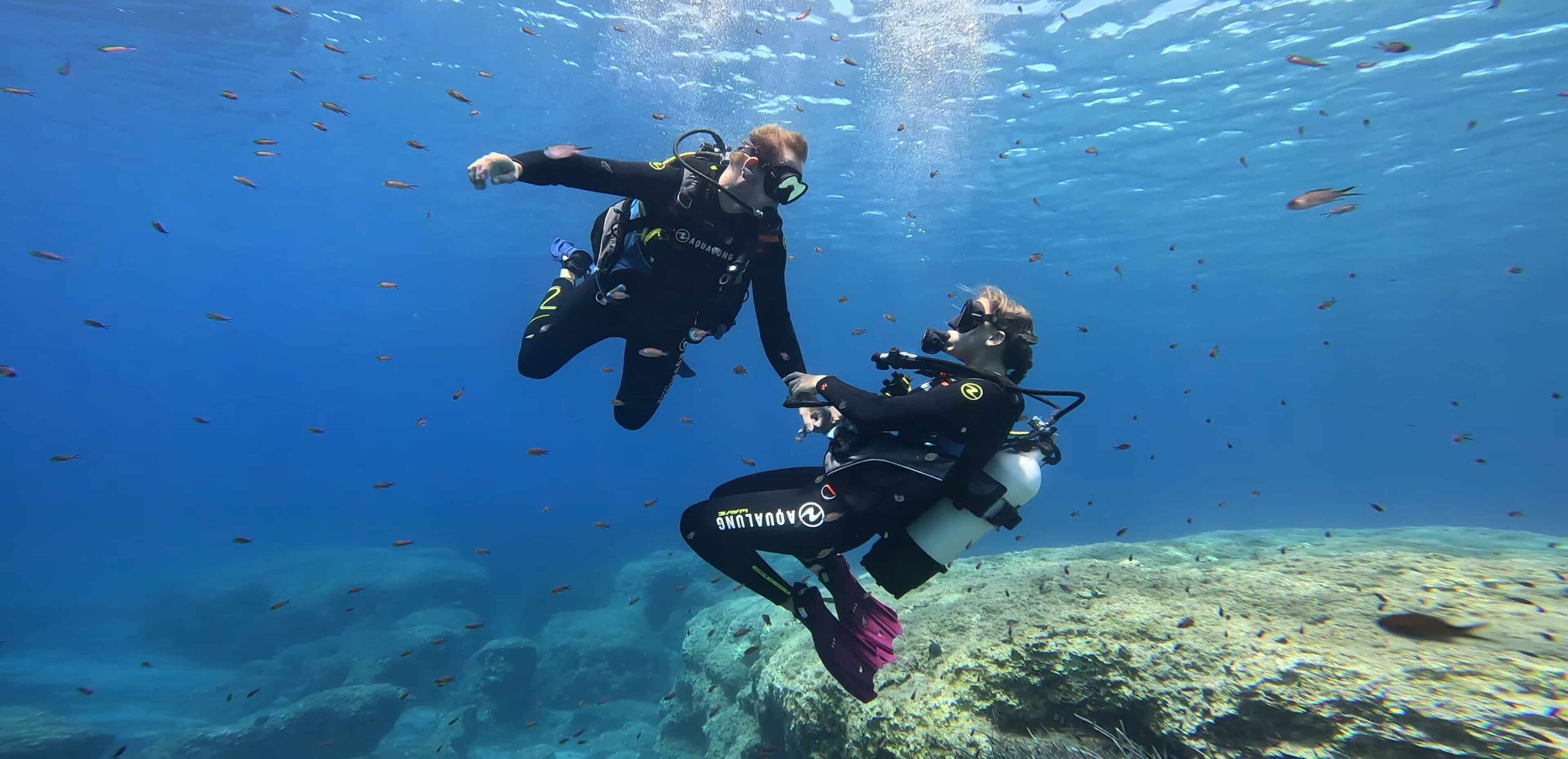
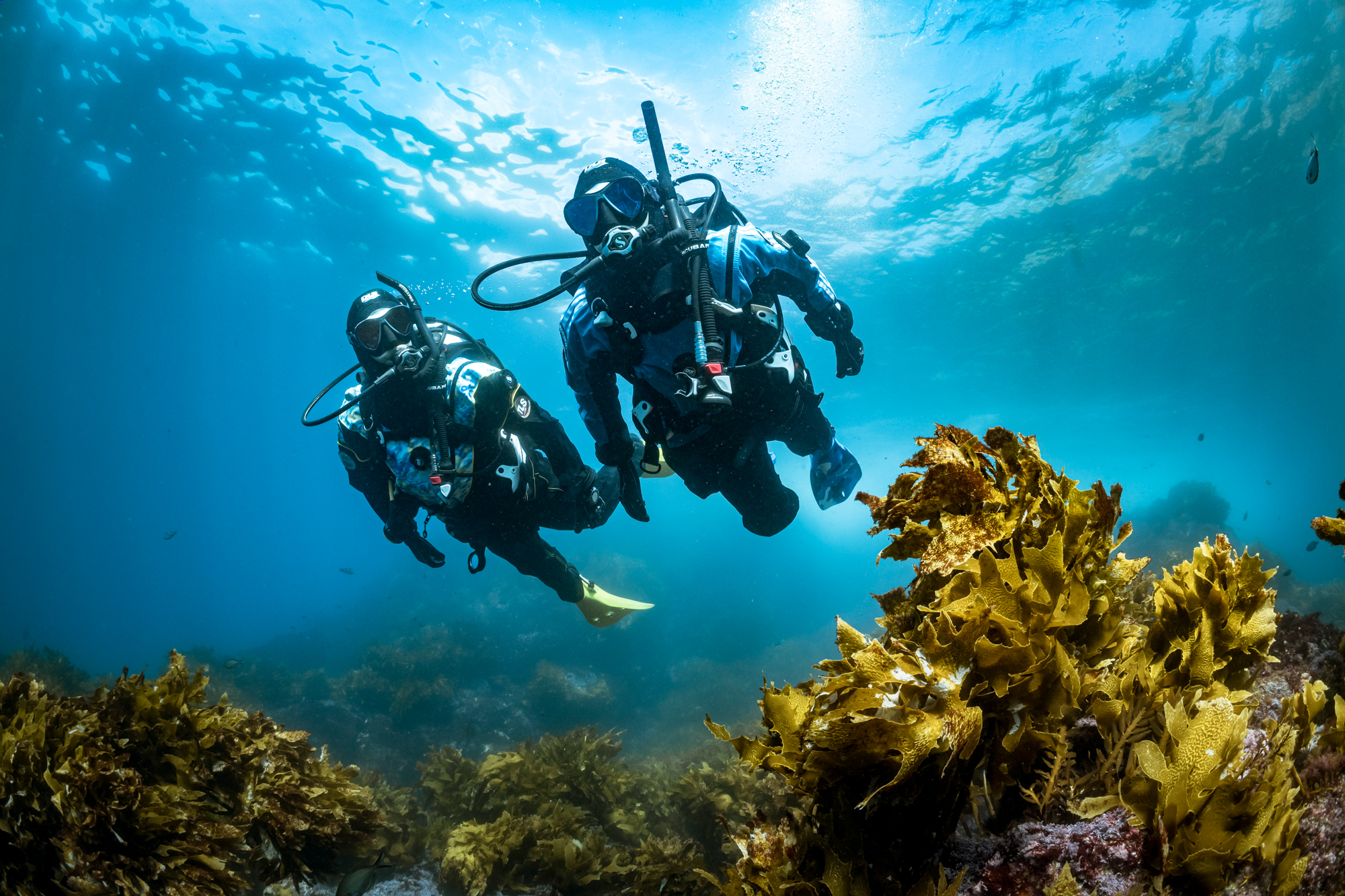
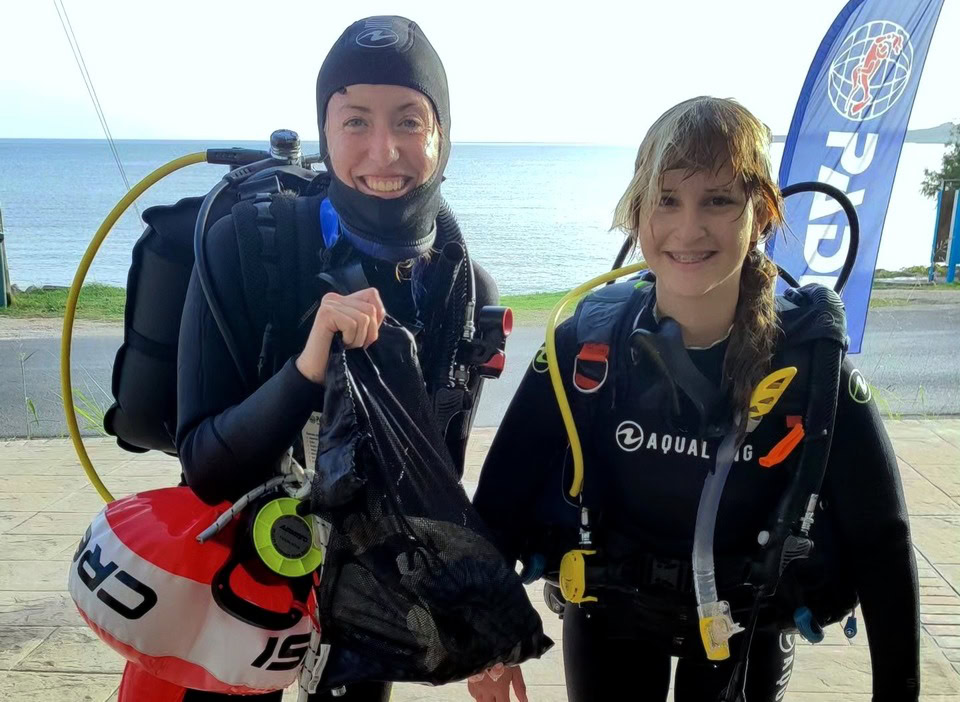
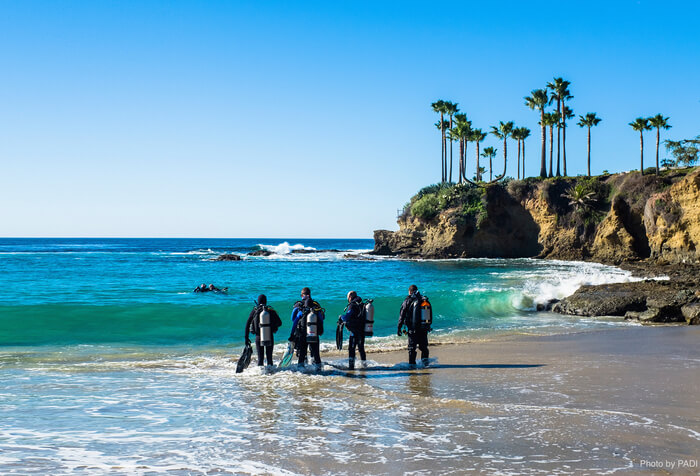
Divers using a dry suit underwater

If you’re looking to take your diving skills to the next level, a Dry Suit Certification is one of the most valuable courses you can take. While many divers associate dry suits only with cold water, the truth is that mastering this equipment opens the door to new environments, improves your control underwater, and makes you a more confident and versatile diver.

In this post, we’ll explore why a dry suit certification is more than just staying warm, it’s about becoming a better diver.

Let’s explore the key benefits of diving dry.

1. Dive Comfortably in Any Temperature

One of the biggest advantages of a dry suit is thermal protection. Unlike a wetsuit, a dry suit keeps you completely dry by sealing out water, allowing you to wear insulating layers underneath. This means you can comfortably dive in colder waters or extend your dive season without feeling restricted by temperature.

More comfort means longer dives, less fatigue, and ultimately more enjoyment underwater.

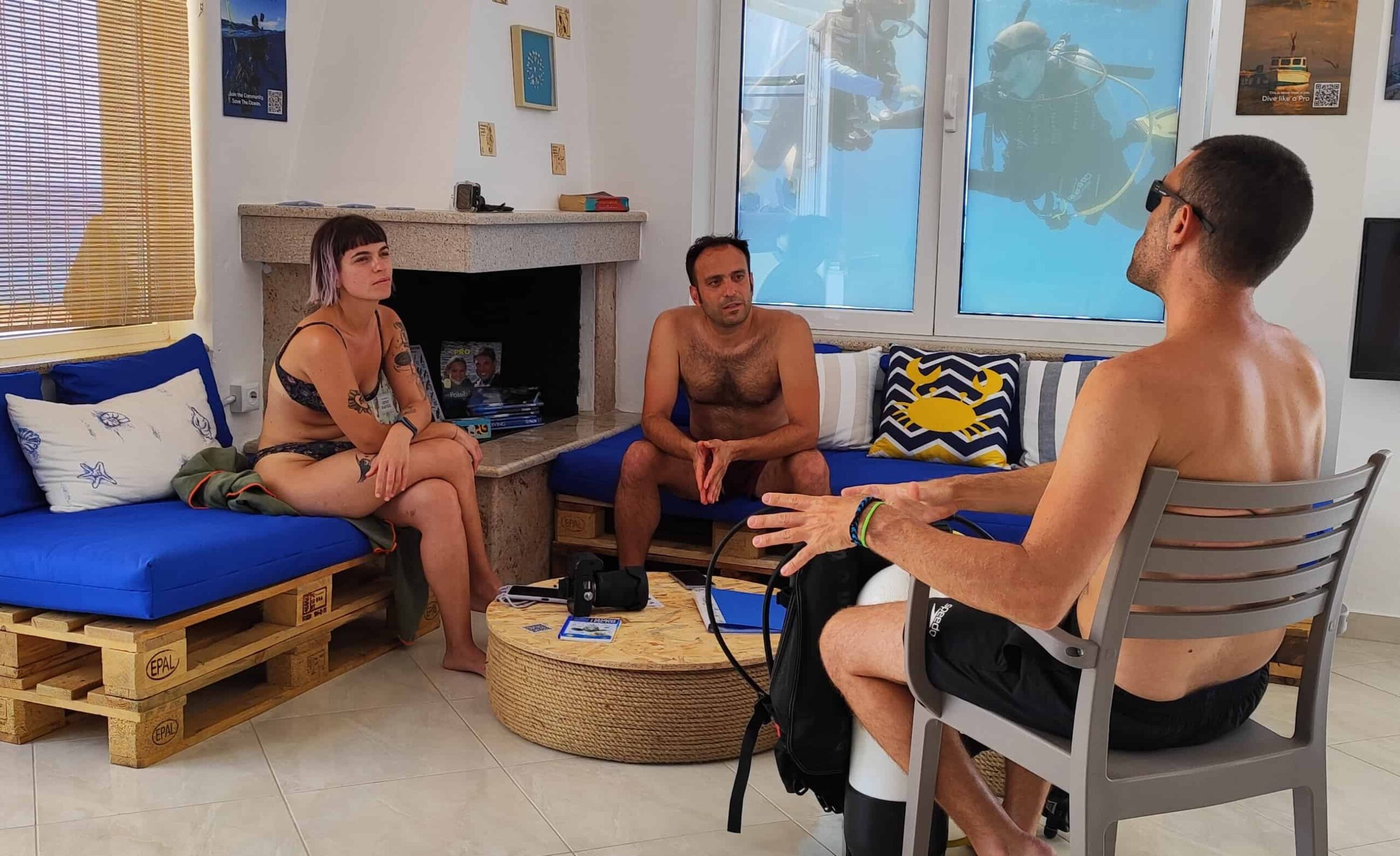
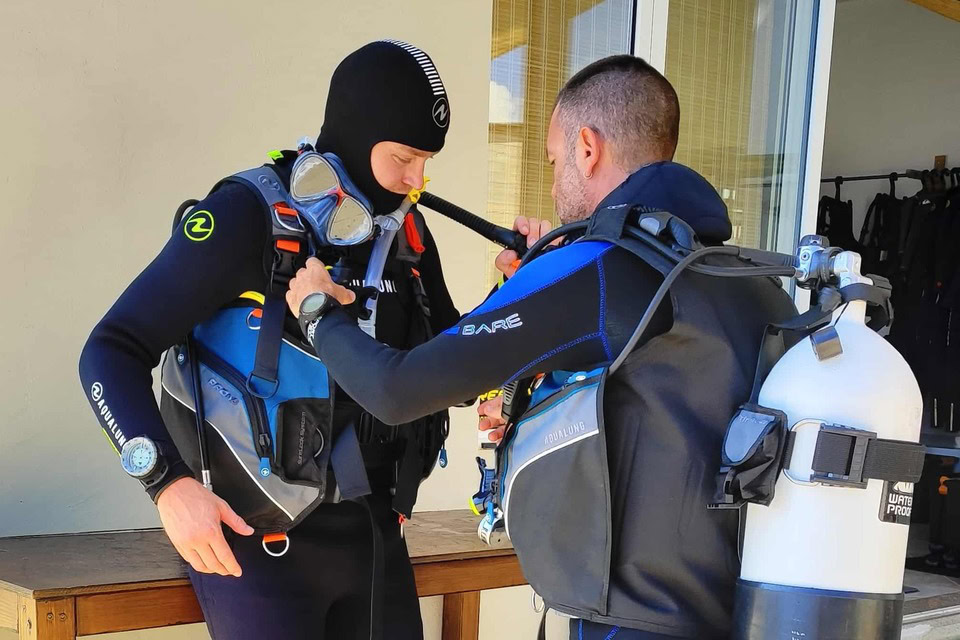
Dry suit Divers  getting ready

2. Improve Your Buoyancy Control

Diving with a dry suit introduces a new level of buoyancy control. Instead of relying only on your BCD, you’ll learn how to manage the air inside your suit as well.

This may sound challenging at first, but it actually makes you a more precise diver. You’ll develop better awareness of your body position, improve trim, and gain finer control during ascents and descents.

These skills transfer directly to all types of diving, making you smoother and more efficient underwater.

3. Expand Your Diving Opportunities

With a dry suit certification, new dive destinations suddenly become accessible. From colder seas to deeper dives and even technical environments, you’re no longer limited by water temperature.

It also allows you to dive more consistently throughout the year, not just during the warmest months. For divers who want to build experience or pursue a professional path, this is a huge advantage.

4. Increase Safety and Confidence

Learning to use a dry suit properly means understanding how to manage air shifts, control buoyancy in different positions, and respond to potential issues.

These skills increase your overall diving awareness and problem-solving ability. As a result, you become a calmer, more confident diver, especially in challenging conditions.

Dry suit training session

5. Reduce Fatigue and Stay Warmer Longer

Cold affects your body more than you might think. Even in moderately warm water, long dives can lead to fatigue and reduced concentration.

By staying warm and dry, your body uses less energy, allowing you to stay focused, relaxed, and fully enjoy the dive. This is especially important for repetitive dives or longer training sessions.

6. A Step Forward in Your Diving Journey

If you’re planning to move toward Divemaster, Instructor level, or simply want to dive more regularly, a dry suit certification is a smart investment.

It shows adaptability, builds advanced skills, and prepares you for a wider range of diving conditions. Many professional divers rely on dry suits regularly, especially in Europe and beyond.

Train With Us at Scuba Turtles

At Scuba Turtles Dive Center, we offer PADI Dry Suit Diver Certification courses designed to help you feel comfortable and confident from your very first dive.

Our experienced instructors will guide you step by step, ensuring you master buoyancy, control, and safety while enjoying the experience.

Whether you’re continuing your training or preparing for a professional path, this course is a great addition to your diving skills.

Want to Learn More?

If you’re curious about the details of dry suit diving, you can also check this helpful guide from PADI: Reasons you need a Dry Suit Certification

Ready to Dive Further?

A dry suit certification isn’t just about staying warm, it’s about unlocking new possibilities, improving your technique, and becoming a more complete diver.

Join us and take your diving to the next level. The underwater world doesn’t have seasons, and with the right training, neither do you.

How Diving Affects the Human Body

Scuba Diving

Understanding Pressure: How Diving Affects the Human Body

Written by Scuba Turtles   |   25 June 2025

Diver exploring underwater with perfect trim and buoyancy

Scuba diving is more than just exploring the underwater world. It’s also about understanding how our body adapts to changes in pressure. Don’t worry, we’re not here to give you a physics lecture, just a simple explanation of how diving affects the human body. And guess what? With the right training, our bodies handle it beautifully!

In this post, we’ll explore how water pressure affects us, why it matters for safety, and how basic physics, like Boyle’s Law, makes diving both fascinating and fun.

Let’s dive into the science of pressure, and how it helps us become better divers.

1. Pressure Increases with Depth: The Basics

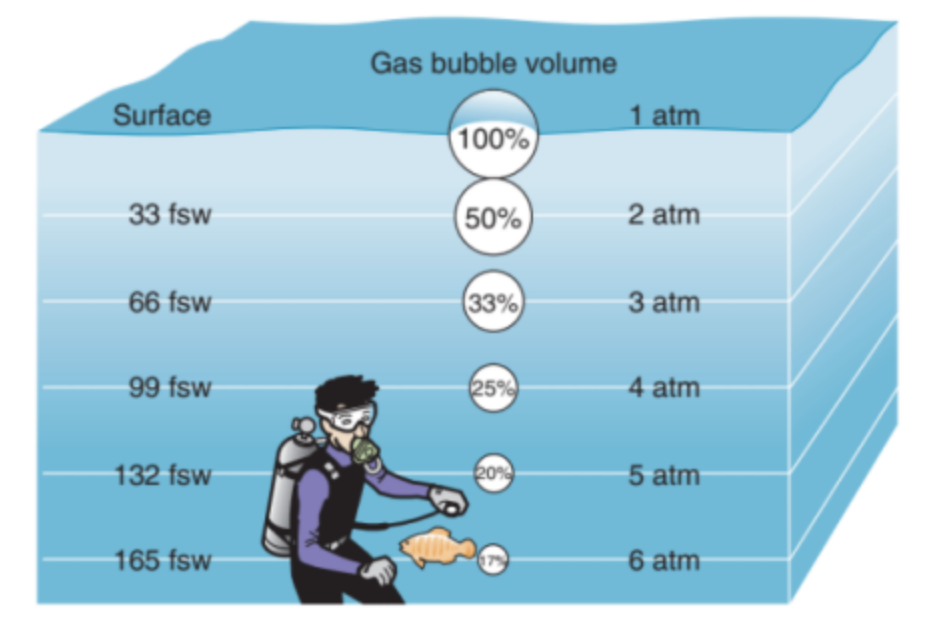
Water is much denser than air. As we descend, the pressure increases quickly, by 1 atmosphere (atm) for every 10 meters. So at 10 meters, you’re experiencing twice the pressure than at the surface. This is completely normal and expected in diving, and it’s why we do things like equalizing our ears and adjusting buoyancy.

Understanding how this affects the body is one of the first things you’ll learn in the PADI Open Water Diver course.

2. Boyle’s Law: The Simple Science Behind Air and Pressure

One of the coolest things about scuba diving is that we actually experience physics in action. A key rule to know is Boyle’s Law, which tells us how pressure and air volume are connected.

Boyle’s Law says: When temperature stays the same, as pressure increases, the volume of gas decreases. And as pressure decreases, volume increases. So, deeper = more pressure = smaller air volume.

Graphic showing Boyle's Law how diving affects the human body at different depths

For example, if you fill a balloon with air and take it down to 10 meters (2 atm), it will shrink to half its size. Bring it back up, and it expands again. This applies to your lungs, BCD, and even your mask!

That’s why we:

Always breathe slowly and never hold our breath when ascending, because expanding air needs to escape naturally.

Add or release air from our BCD to stay neutrally buoyant.

Equalize our mask as we descend to prevent it from squeezing.

It might sound technical, but it’s easy to manage, and your instructor will guide you through every step. It’s actually quite fun to learn how your body works with the physics!

3. Equalizing Pressure: Taking Care of Your Ears

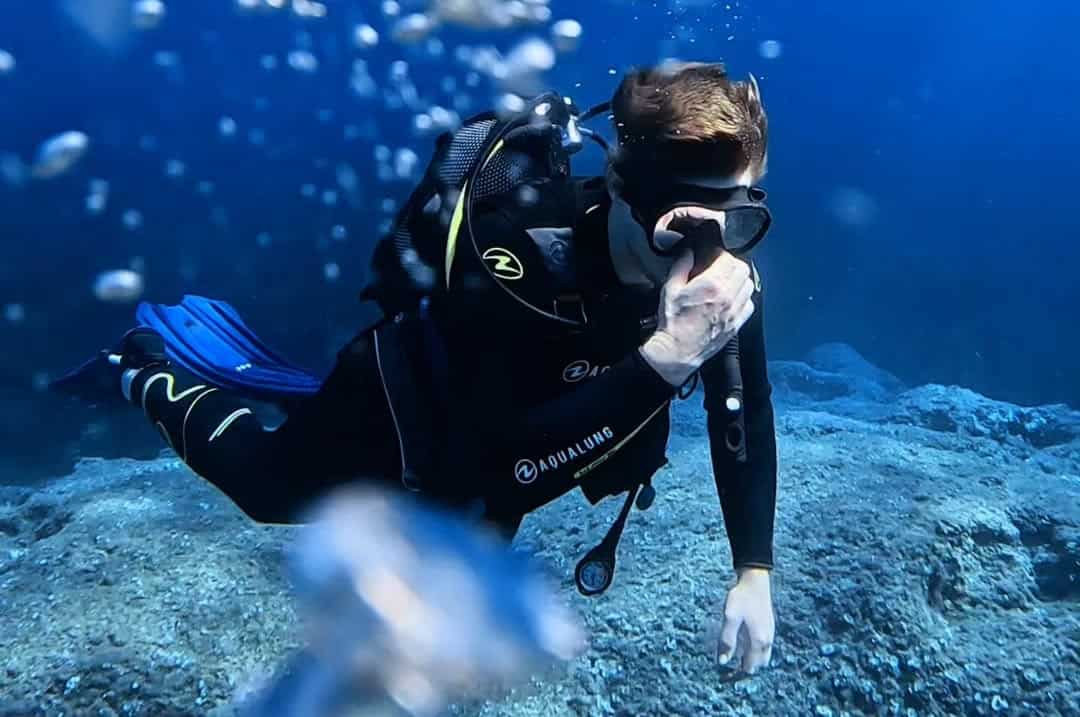
As pressure increases, it affects the air spaces in your body, especially your ears. That’s why divers equalize by pinching their nose and gently blowing. This helps match the pressure inside your ears with the water pressure outside. It’s a small habit that makes a big difference for comfort and safety underwater.

You’ll learn to equalize early and often during your descent. Once you get used to it, it becomes second nature!

Diver equalizing ears during descent

4. Buoyancy and Breathing: Your Underwater Balance

Boyle’s Law also affects your buoyancy. As you go deeper, the air in your BCD compresses and you become less buoyant. So, you may need to add a bit of air to stay balanced. On the way up, the air expands, so you release some. Mastering this gives you the feeling of effortlessly floating underwater.

Breathing also changes slightly at depth—air feels denser and you may notice you’re using it a bit faster. But don’t worry! With relaxed, deep breaths and proper training, you’ll stay comfortable and in control.

5. Slow Ascents and Safety Stops: Giving Your Body Time

One of diving’s most important safety rules is ascending slowly. As we go up, the pressure decreases and the air in our body and gear expands—again, thanks to Boyle’s Law. That’s why slow ascents and a 3-minute safety stop at 5 meters are part of every dive plan.

This gives your body time to safely release excess nitrogen and helps you avoid decompression sickness (which sounds scarier than it really is—it’s very rare when you follow your training and dive computer).

Divers making a safety stop before surfacing

6. Your Body Is Smarter Than You Think

With proper training, your body adapts beautifully to changes in pressure. Your ears, lungs, and air spaces all work in harmony, especially when you stay relaxed and follow the simple techniques you’ll learn during your certification course.

Divers who understand the basics of pressure and gas laws become safer, more confident, and more aware underwater. It’s a great example of how science and adventure go hand in hand!

Trust the Process and Enjoy the Dive

Now that you know how diving affects the human body… You know that diving is a perfect mix of exploration, self-awareness, and science. Understanding pressure, especially how it affects air spaces in our body, makes diving even more fascinating. And with training, it all becomes second nature.

So next time you go scuba diving, remember! you’re not just diving into water, you’re diving into physics and the magic of the ocean.

Want to learn more? Join our next PADI Open Water Diver course and start your underwater journey!

Scuba Diving in Proti Island

Scuba Diving

Scuba Diving Adventures in Proti Island, Peloponnese

Written by Scuba Turtles   |   12 April 2025

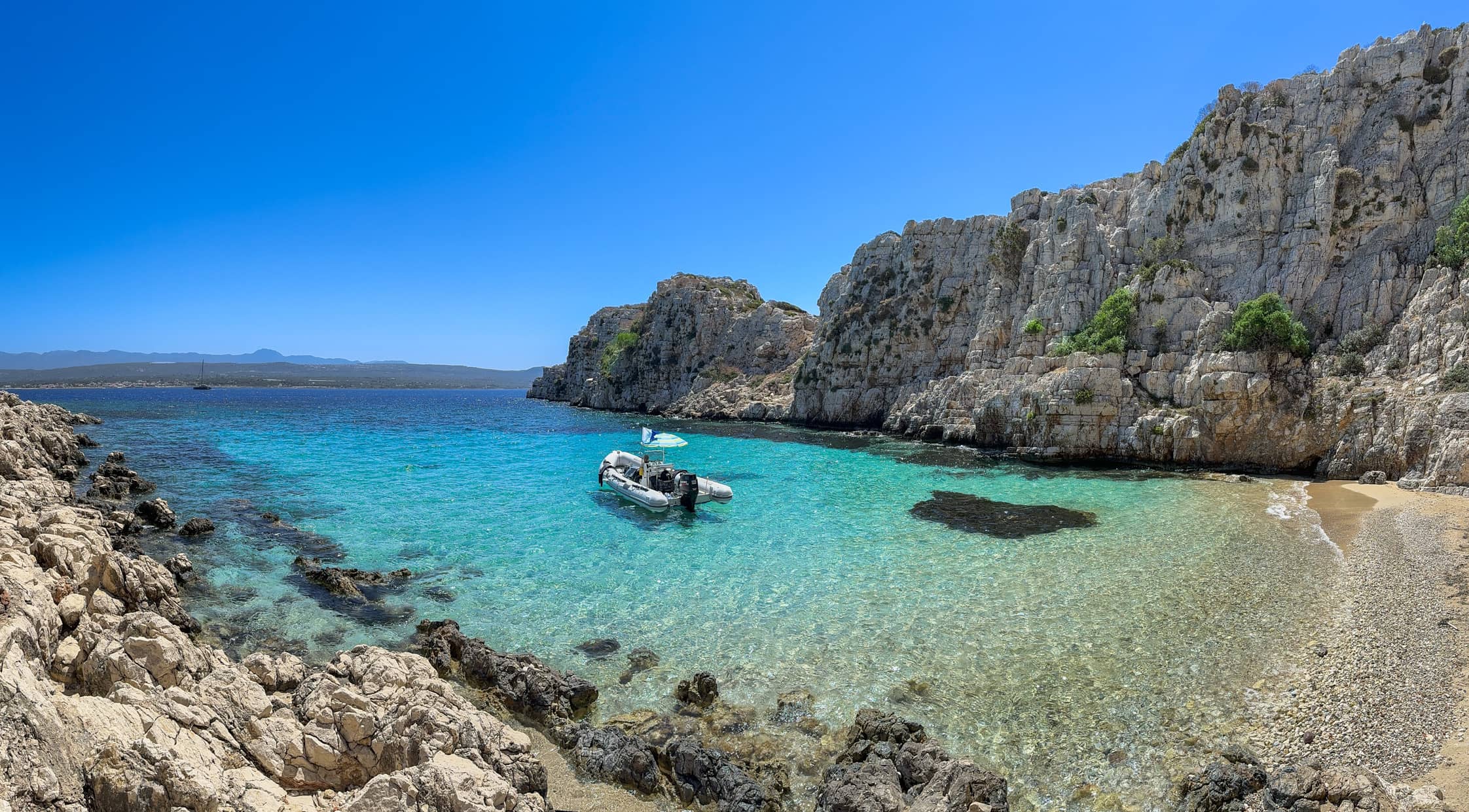
View of Proti Island

Proti Island is one of the hidden gems of the Peloponnese, offering stunning landscapes both above and below the surface. Located just off the coast of Marathopoli in Messinia, this uninhabited island is rich in history and surrounded by crystal-clear waters, making it an ideal destination for scuba diving lovers.

From ancient shipwrecks to vibrant marine life, Proti Island offers a unique blend of history, nature, and underwater exploration.

Vourlia beach at port Island

The Fascinating History of Proti Island

Proti Island is not just a diver’s paradise—it’s also a place of historical significance. Named after the sea god Proteus, son of Poseidon, the island has witnessed centuries of maritime activity. In ancient times, it served as a strategic outpost for sailors navigating the Ionian Sea. Archaeological remains—including ancient walls and cisterns—show that it was fortified during the Hellenistic period.

During the Greek War of Independence in the early 19th century, Proti was used as a lookout point and shelter. Even today, you can hike up to a small monastery on the island and enjoy panoramic views of the sea and surrounding coastline.

Exploring the Dive Sites Around Proti Island

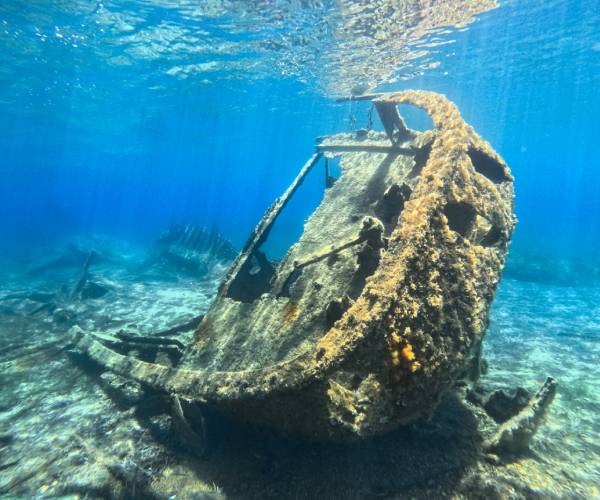
1. Vourlia Wreck

One of the highlights of diving around Proti is the Vourlia wreck, also known as Maria K. Sitting at a depth of about 5 meters, this 40-meter vessel was sunk by Italian bombers during World War II. Today, it rests peacefully on the seafloor and is home to schools of damselfish, nudibranchs, and moray eels. It’s a favorite among underwater photographers and perfect for divers of all levels.

The dive site starts at the wreck and continues into a mix of reef and wall dive that is truly breathtaking.

Scuba Diving a wreck at Proti Island

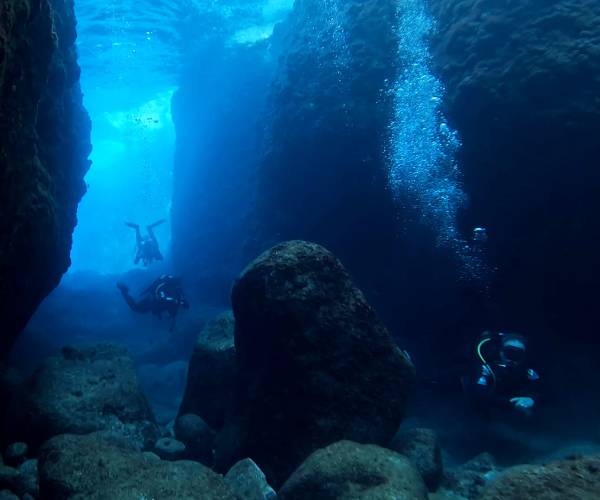
2. Katoulias Canyon

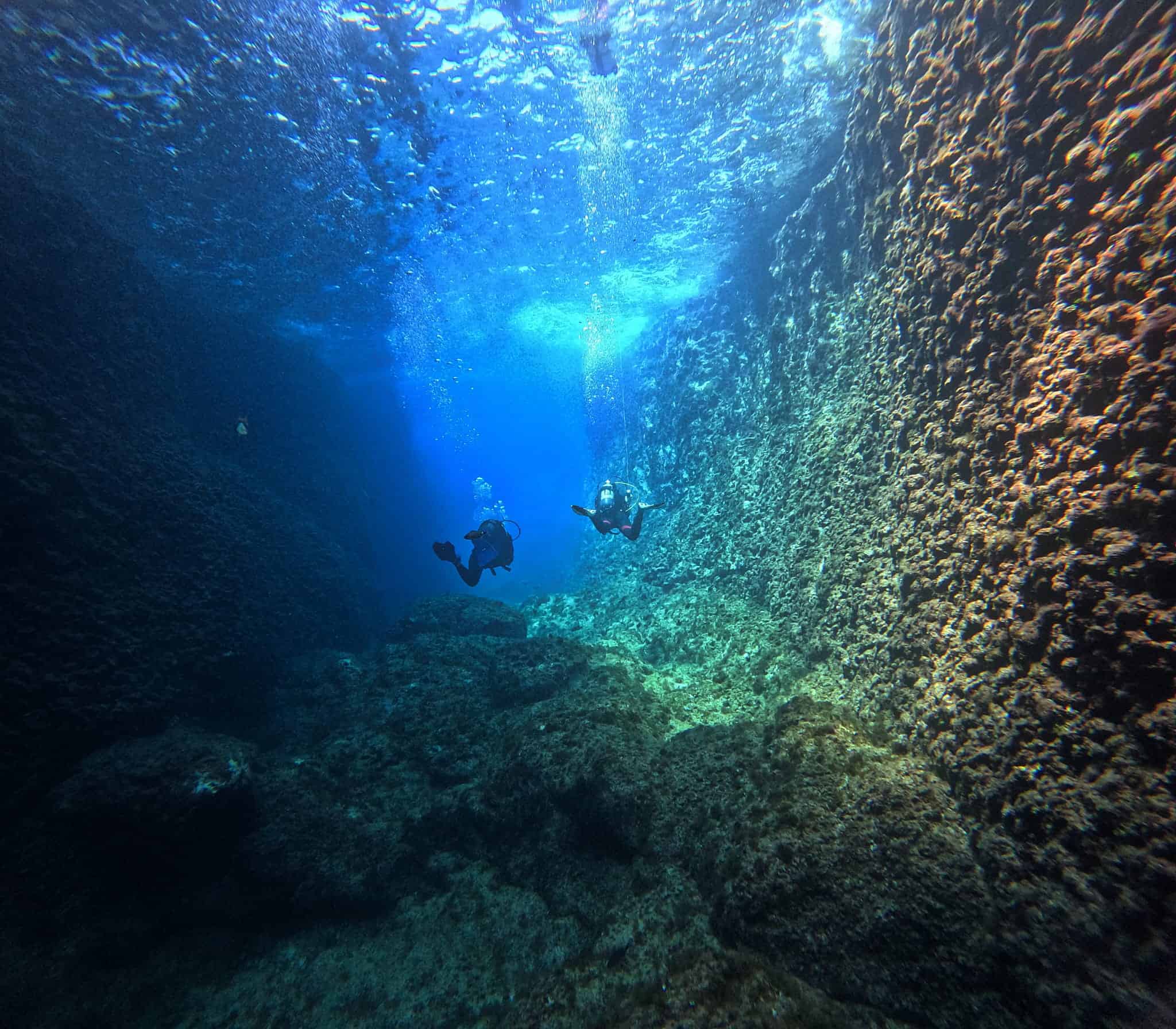
This breathtaking underwater canyon is named after the legendary pirate Katoulias, who used Proti as a hideout in the late 18th century. The site features towering rock formations, swim-throughs, and dramatic drop-offs, making it ideal for those who enjoy topography dives. With visibility often exceeding 25 meters, it’s common to spot amberjacks, groupers, and even the occasional sea turtles cruising through the canyon.

Katoulias was infamous for raiding merchant ships across the Ionian Sea and using the island’s natural caves and cliffs as his base. Local legends even speak of hidden treasure still buried somewhere on the island!

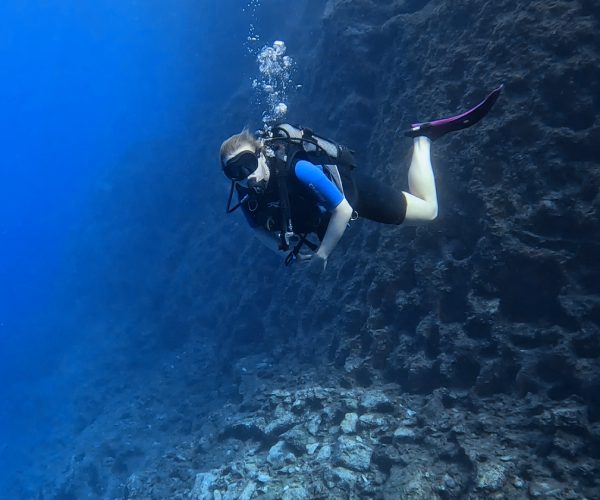
Divers exploring the port canyons

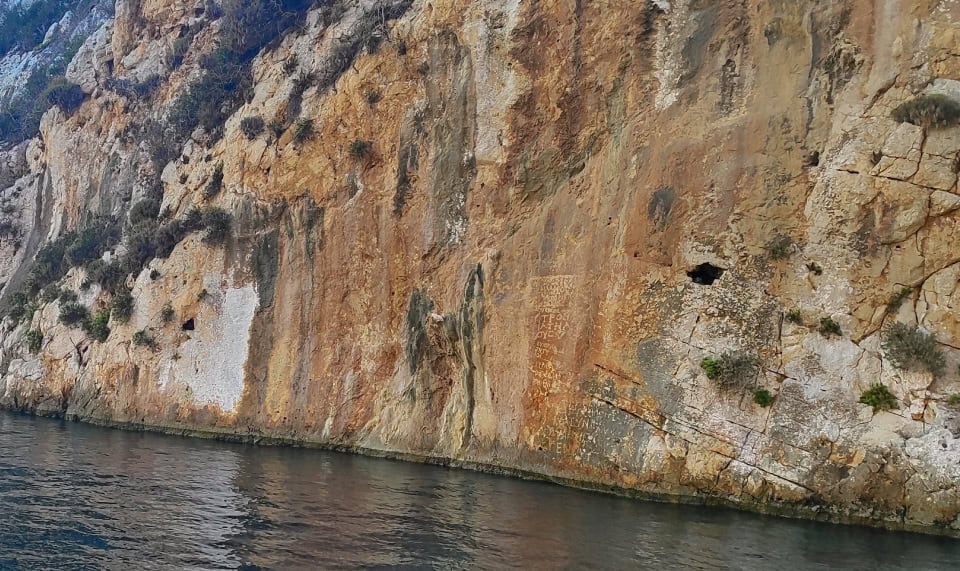
3. Grammeno

Grammeno offers a stunning reef that starts at just 5 meters and slopes down to about 12 meters. The wall is covered in soft corals, sponges, and features vibrant marine life including wrasse, nudibranchs, and the occasional octopus. It’s also a great place to explore meadows of Posidonia oceanica, making it suitable for both beginner and experienced divers.

Historically, the area around Grammeno was used as an anchorage by pirates and sailors. Inscriptions carved into the wall—wishing for safe passages and good weather—can still be found today. It’s a peaceful yet fascinating site, rich in both natural beauty and history.

Grammeno inscriptions at Proti

4. Anchor’s Valley

Scattered remains of ancient pottery and large anchors lie hidden where the wall meets the sandy bottom, a quiet reminder of the island’s role in ancient trade and naval activity. This site offers a beautiful mix of history, an impressive underwater landscape, and rich marine life, with octopuses, feather stars, and large groupers often spotted in the area.

wall dive at Proti Island

5. Blue Hole

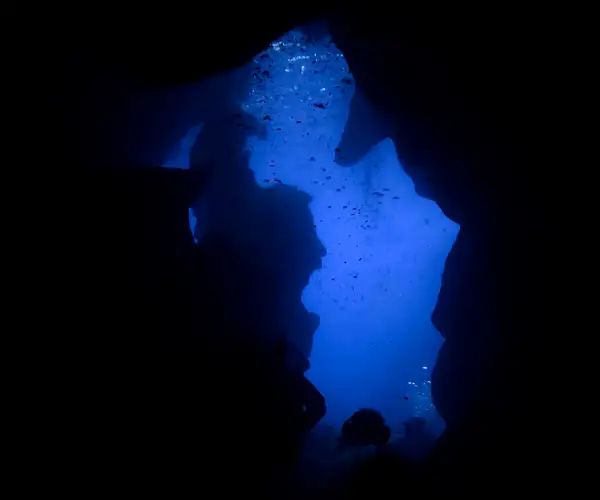
This dive begins from a small cove and takes you through a cavern leading into another sheltered bay. Between the two coves lies a unique room filled with stalactites—an unforgettable photo opportunity. From there, the dive continues along a beautiful wall that drops to depths of up to 30 meters. It’s an exciting dive suitable for all certification levels.

Blue hole at Proti, Messinia

Why choose Scuba Turtles for your Scuba Diving in Proti Island?

We organize regular boat dives to Proti Island, offering something for everyone—from beginner-friendly sites to more advanced underwater adventures. Our experienced instructors and dive guides are passionate about the area and will ensure you get the most out of your diving experience.

Book your dive trip to Proti Island with us and experience the perfect blend of history, nature, and adventure.

10 Essential Tips for Underwater Photography

Scuba Diving

10 Essential Tips for Underwater Photography

Written by Scuba Turtles   |   2 March 2025

diver doing an underwater photography

Underwater photography is a thrilling and rewarding way to capture the beauty of the ocean. However, shooting beneath the waves comes with its own set of challenges, from lighting issues to camera settings and composition.

Whether you’re a beginner or looking to improve your shots, these top underwater photography tips will help you take stunning images of marine life and seascapes.

1. Use the Right Camera and Housing

Choosing the right camera is crucial for underwater photography. Compact cameras, mirrorless, or DSLR cameras with underwater housing are all excellent options. Ensure your housing is rated for the depth you plan to dive and that all buttons and dials are easily accessible.

Nowadays, you can also find waterproof phone cases, like the one of Sealife, that allow you to take underwater photos with your smartphone. This is a great option if your phone produces high-quality images, but it will never match the performance of a mirrorless or DSLR camera with proper housing and lighting.

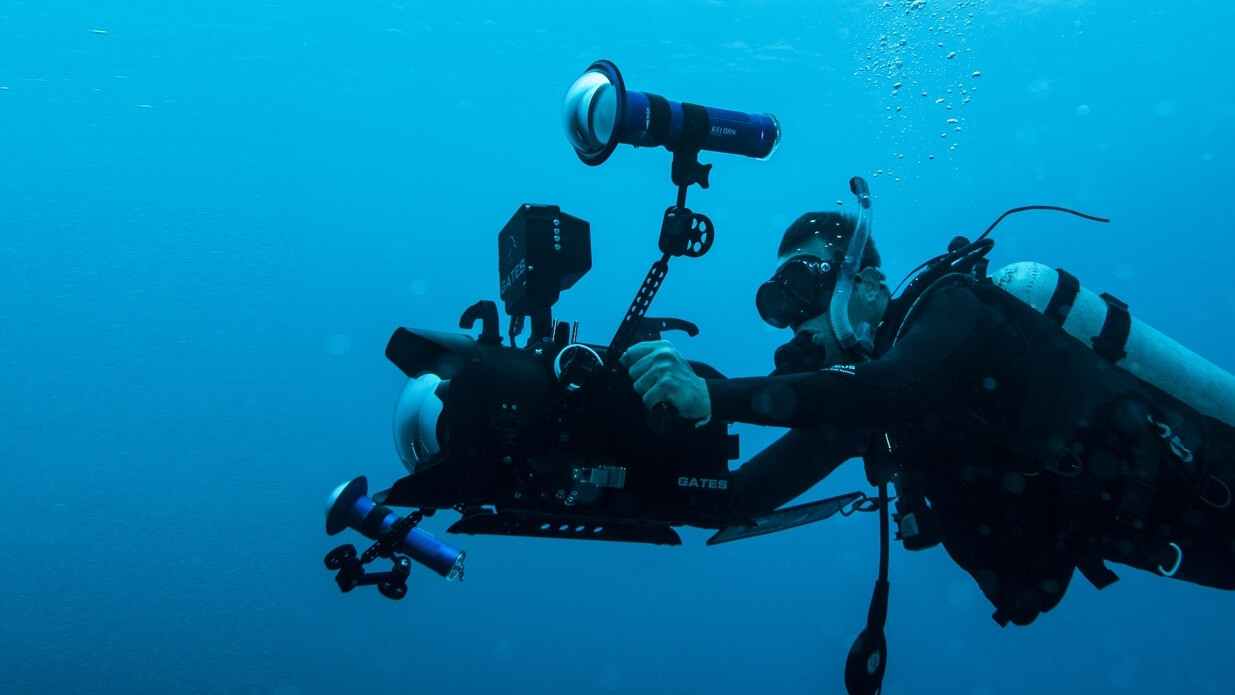
Diver with camera

2. Master White Balance and Lighting

Water absorbs light, causing colors to fade as you go deeper. To counteract this, adjust your white balance manually or use a red filter. For the best results, invest in an underwater strobe or video light to bring back lost colors.

3. Get Close to Your Subject

Water reduces clarity and contrast, so the closer you get to your subject, the sharper and more vibrant your images will be. Ideally, try to shoot within 1 to 2 meters of your subject to minimize water distortion.

Octopus posing for photo

4. Shoot in RAW Format

Shooting in RAW allows for more flexibility in post-processing. RAW files retain more detail and color information, making it easier to adjust exposure, contrast, and white balance later.

5. Perfect Your Buoyancy

Good buoyancy control is essential for capturing clear and steady images. It prevents disturbing the seabed or startling marine life while allowing you to frame your shots with precision.

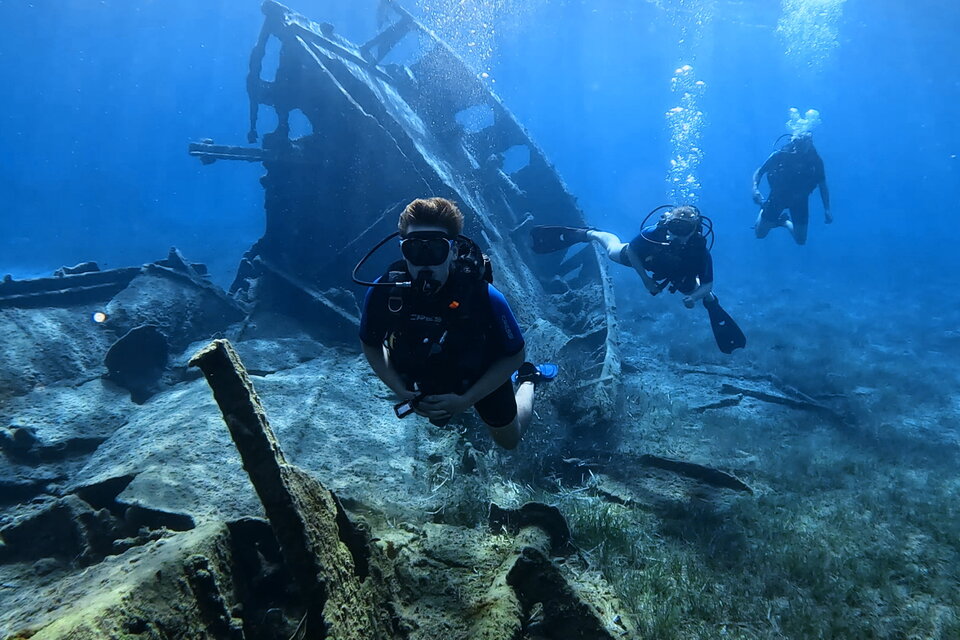
Vourlia wreck with divers

6. Use the Right Lens

Wide-angle and macro lenses are the best choices for underwater photography. A wide-angle lens lets you capture expansive reef scenes and large marine life, while a macro lens is ideal for photographing tiny critters.

7. Focus on the Eyes

For compelling underwater portraits, always aim to focus on the eyes of the subject. Sharp, well-lit eyes create a more engaging and lifelike image.

Group of divers looking to the surface

8. Be Aware of Backscatter

Backscatter occurs when particles in the water reflect light from your flash or strobes. To reduce this, position your light source at an angle rather than directly in front of your subject.

9. Time Your Shots with Natural Light

For natural light photography, the best time to shoot is during midday when the sun is directly overhead. The shallower you are, the more vibrant the colors will appear in your photos.

Lionfish at Proti Island

10. Respect Marine Life

Responsible underwater photography means never touching or disturbing marine creatures. Observe from a safe distance and avoid using excessive flash, which can stress marine life.

Improve Your Underwater Photography Skills with Us!

Want to practice your underwater photography in crystal-clear waters? Join us for a scuba diving day in Proti Island and capture breathtaking shots of our stunning reefs.

Book your dives with us today and start your underwater photography adventure!

How to Get Your PADI Certification: A Step-by-Step Guide

Scuba Diving

How to Get Your PADI Certification: A Step-by-Step Guide

Written by Scuba Turtles   |   10 September 2024

Photo of a diver completing certification course

Are you eager to explore the underwater world and experience the thrill of scuba diving? The first step is getting your PADI (Professional Association of Diving Instructors) certification. In this blog post, we’ll guide you through the process of earning your PADI certification and prepare you for an incredible diving adventure.

Thinking about getting certified and exploring the depths of the ocean? It’s a fantastic decision, but it requires proper training and preparation. Getting your PADI certification not only opens doors to new adventures but also ensures that you dive safely and responsibly. So, let’s dive into the essential steps to becoming a certified diver!

Ready to embark on your diving journey? Here’s how to get your PADI certification.

1. Choose the Right PADI Course

The first step in getting your PADI certification is selecting the right course. The PADI Open Water Diver course is the most common entry-level certification and is perfect for beginners. It covers fundamental skills such as buoyancy control, navigation, and emergency procedures. For more advanced diving experiences, consider additional courses like the PADI Advanced Open Water Diver or specialty courses.

Choosing the right course sets the foundation for your diving skills and ensures that you receive the appropriate training for your goals. Whether you’re a complete novice or looking to advance your skills, there’s a PADI course that fits your needs.

Selection of PADI diving courses

2. Find a Reputable Dive Shop or Instructor

Once you’ve chosen your course, the next step is finding a dive shop or instructor. Look for PADI dive centers that have positive reviews and experienced instructors. A good dive shop will provide quality equipment, a safe learning environment, and knowledgeable instructors who will guide you through the certification process.

Research local dive shops, ask for recommendations, and visit them if possible to ensure they meet your expectations. A good instructor will make your learning experience enjoyable and effective, setting you up for success in your diving adventures.

Diving equipment and shop interior

3. Complete the Required Coursework

Your PADI course will include both theoretical and practical components. You’ll start with e-learning modules covering dive theory, safety procedures, and equipment use. Next, you’ll practice essential skills in confined water, to build your confidence and competence.

Completing the coursework is crucial for understanding the principles of diving and ensuring you’re prepared for real-world underwater experiences. Your instructor will be there to help you master the skills you need.

Students learning scuba diving theory

4. Participate in Open Water Dives

After finishing the theoretical and confined water training, you’ll move on to open water dives. These dives take place in natural bodies of water, like oceans or lakes, where you’ll demonstrate your skills in real diving conditions. Typically, you’ll need to complete four open water dives under the supervision of your instructor.

These open water dives are where you put your training into practice and experience the excitement of diving in natural environments. They also help you build confidence and comfort in the water, preparing you for future dives.

Divers performing open water dives at Vourlia's wreck

5. Keep Diving and Stay Updated

Congratulations on earning your PADI certification! To maintain your skills and stay current, consider joining a local dive club, participating in continuing education courses, and regularly going on dives. PADI offers advanced and specialty courses that can further enhance your diving experience and knowledge.

Continued diving and training not only improve your skills but also keep you engaged in the diving community. It’s a great way to meet people, learn new techniques, and enjoy the sport you love.

Divers participating in a community event

Ready to start your diving adventure? Sign up for a PADI course today and embark on a journey of underwater exploration and discovery!

The Importance of Scuba Diving and Skill Training

Scuba Diving

The Importance of Scuba Diving and Skill Training

Written by Scuba Turtles   |   18 April 2024

“photo

Scuba diving isn’t only fun; it also requires skill and responsibility. In this blog post, we’ll discuss the importance of diving training to ensure continued enjoyment and safety.

Ever told your family you’re going scuba diving and seen the worry in their eyes? Trust me, I’ve been there. But here’s the thing: scuba diving isn’t just an extreme sport; it’s an adventure that requires knowledge and practice. It’s those very skills that make it safe. So, if your family’s worried, reassure them that you’ve got this! With the right training and experience, scuba diving can be one of the most amazing and safe experiences out there.

Let’s get ready and dive into why training is so important for staying safe underwater.

1. Self-Reliance: If you are safe, your buddy too

Scuba diving empowers individuals to become self-reliant in challenging underwater environments. Through proper training, like the PADI Open Water course, divers acquire essential skills such as buoyancy control, navigation, and emergency procedures. These skills not only foster confidence but also promote independence.

But being safe isn’t just about you. If you’re safe, your buddy is safe too. That’s why self-reliance is so important. When you learn to take care of yourself underwater, you also help keep your dive buddy safe. It’s like looking out for each other.

“Divers

2. Safety First: The main rule in case of emergency

The ocean is beautiful but unpredictable. That’s why scuba training focuses on safety. Learning how to handle gear, deal with emergencies, and communicating underwater helps divers handle challenges and make diving safer for everyone.
Handling weather changes is crucial for safe scuba diving. During training, divers learn to recognize signs of changing weather and how to adapt. If weather conditions shift unexpectedly, such as sudden storms or strong winds, trained divers know how to respond calmly and safely. They learn to assess the situation, adjust dive plans if necessary, and communicate effectively with their dive buddies and the surface team.

“Divers

3. Rescue Skills: Becoming a Helpful Diver

When we’re diving, it’s not just about taking care of ourselves; we need to be ready to help others too. That’s why training, like the PADI Rescue course, Emergency First Responder and Emergency Oxygen Provider, is so important. These courses teach us how to help in emergencies or accidents while diving. One more example of the importance or diving training. They give us the knowledge and practice we need to become better helpers.

We learn rescue techniques that help us assist others in case of an emergency underwater. These skills aren’t just important for keeping our fellow divers safe; they also create a strong sense of community among divers. By knowing how to help each other, we build camaraderie and make diving safer and more enjoyable for everyone.

“PADI

4. Teamwork and Communication: The art of hand signaling

Diving is often done with a group, so being able to communicate well is super important. In training, we learn lots of ways to signal things underwater. It’s not just about communicating; it’s about using hand signals and other signs to share information with our dive buddies. Sometimes, these signals become a way to communicate even when we’re not diving.

And when we’re underwater, we get to see all kinds of cool creatures! In training, we learn how to signal the names of the marine life that we see underwater. It’s pretty neat, but remember, we’re not actually communicating with them. We’re just saying their names to our dive buddies so everyone knows what we’re seeing. It’s a fun way to share the underwater adventure!

“Divers

5. Environmental Stewardship: Learn to protect what you love

Education in scuba diving often includes learning about the environment. We get to learn about the delicate ecosystems beneath the surface of the water. Responsible divers are better prepared to take care of marine life and the environment.

When we’re diving, we want to make sure we’re not harming the underwater world. By being responsible divers and maintaining good buoyancy, we can reduce our impact on marine life and ecosystems. This helps to keep the underwater environments healthy and thriving for future generations to enjoy.

In conclusion, scuba diving is not merely a recreational sport; it’s a journey of self-discovery, responsibility, and a connection to the ocean. Investing time in proper training not only helps your personal enjoyment but also contributes to the safety and well-being of the entire diving community.

So, strap on your gear, sign up for your next PADI course, and discover the importance of continuous diving training.

5 Reasons Why you Should do Scuba Diving in Messinia

Scuba Diving

5 Reasons Why you Should do Scuba Diving in Messinia

Written by Scuba Turtles   |   28 May 2023

“photo

Welcome to Messinia, a gorgeous destination located in the heart of the Peloponnese region of Greece. This picturesque region is known for its history, landscapes, and ancient ruins, but it also offers underwater wonders to divers. Let us guide you through the enchanting world of diving in Messinia.

Unveiling the Underwater Secrets.

1. Vibrant Marine Life

Dive into the vibrant underwater world of the Ionian Sea and discover a variety of marine life like no other. From schools of fish to unique and fascinating creatures like octopuses, moray eels, sea turtles, rays and seahorses, every dive brings an unexpected surprise. Embark on an underwater journey and discover nature’s wonders beneath the waves.

“cuttlefish

2. Spectacular Dive Sites

Divers of all levels can enjoy the amazing dive sites off Messinia’s coasts. From easy shore dives to thrilling cave explorations, the region offers a diverse range of underwater landscapes to explore. For example, on Proti Island you can explore more than fifteen dive sites where you will discover wrecks, caves and colorful walls. Not far from there, you will find Navarino protected underwater park. This park is famous for the array of ancient artifacts and wrecks that hold its waters.

Don’t miss the chance to dive into legendary underwater caves and ancient shipwrecks that hold stories of the past.

“photo

3. Pristine Waters and Visibility

Experience unparalleled clarity as you plunge into the pristine waters of Messinia. With excellent visibility that often exceeds 30 meters, divers are treated to awe-inspiring views of underwater rock formations, sea grass meadows, vibrant sponges, and thriving marine ecosystems.

“Diver

4. Dive Training and Certification

Whether you’re a seasoned diver or a novice looking to embark on your first underwater adventure, Messinia offers a range of dive centers and schools that provide professional training and certification. Dive instructors with extensive knowledge of the local marine life and dive sites ensure a safe and unforgettable experience.

“diver

5. Conservation Efforts

Messinia is dedicated to preserving its marine ecosystem and promoting sustainable diving practices. Several initiatives and organizations work tirelessly to protect the underwater habitats, ensuring that future generations can continue to marvel at the region’s natural beauty.

If you want to volunteer or donate to protect the sea turtles in the area, please visit Archelon site.

Embarking on a diving journey in the Ionian sea promises an unforgettable experience for both seasoned divers and beginners alike. The region’s vibrant marine life, spectacular dive sites, pristine waters, and commitment to conservation create an ideal environment for exploration and appreciation of the underwater world. Whether you’re fascinated by ancient shipwrecks, intrigued by the diversity of marine species, or simply seeking tranquility beneath the waves, Messinia offers it all.

Diving in Messinia is a gateway to an underwater paradise where adventure and serenity coexist. Join us at our dive center and jump on an underwater adventure like no other. Let us guide you through the wonders of this captivating region, where the magic of the sea awaits your exploration.

How Scuba Diving may improve your health

Scuba Diving

How Scuba Diving may improve your health

Written by Scuba Turtles   |   12 February 2023

“divers

There are numerous reasons why people enjoy this sport, from discovering the unknown and admiring magnificent aquatic wildlife to making new friends and creating memories that will last a lifetime. But what happens if we told you that scuba diving is indeed beneficial for your health?

If you’re wondering whether you should start a sport or remain sedentary, let us convince you why you should try scuba diving and how you will benefit from it.

1. Decreases blood pressure and enhances blood circulation

When we spend time underwater, our body try to get used and adapt to the gradient pressure. Each one of your muscles require more oxygen to perform normally, so your blood vessels dilate to allow this. Furthermore, our bodies adapt to this pressure by slowing down our breathing in order to reduce air consumption, and this has been shown to help by lowering our blood pressure. A good diver must breathe deeply and slowly and several studies now presume that regular divers are less inclined to suffer from a heart attack or stroke.

2. Boost your bone health

Diving generally requires being outdoors and exposed to sunlight. Fortunately, the sun is the body’s primary source of Vitamin D. This Vitamin is essential for our health, but getting enough of it from food can be difficult. Therefore, getting enough vitamin D increases the body’s calcium intake, which is necessary for healthy bones and teeth.

“divers

3. Improves your fitness and flexibility

Can it be a better sport than the one that gets you in shape with a relaxing workout? As you effortlessly float underwater, the movements you make put all your muscles to work against the water’s resistance.This motion increases the heart rate, invigorates muscles and builds stamina and strength. Furthermore, underwater activity is easier for joints and ligaments as well.

Learning how to dive and relax the body and mind enables your muscles to ease and thereby increase your flexibility.

4. Lowers stress levels and strengthen mental health

As previously mentioned, breathing control and diving are a whole. Some may call diving a form of meditation. Meditation, like diving, is well known for the relaxed mental status that can provide. Helps ease stress levels, control anxiety, reduce age-related memory loss, combat addictions and promote emotional health and self-consciousness.
“people

Ready to discover the health benefits of scuba diving by yourself? Go ahead and sign up for a course at Scuba Turtles and start learning today with PADI eLearning.

Top destinations for Scuba Diving in Greece

Scuba Diving

Top destinations for Scuba Diving in Greece

Written by Scuba Turtles   |   03 Aug 2022

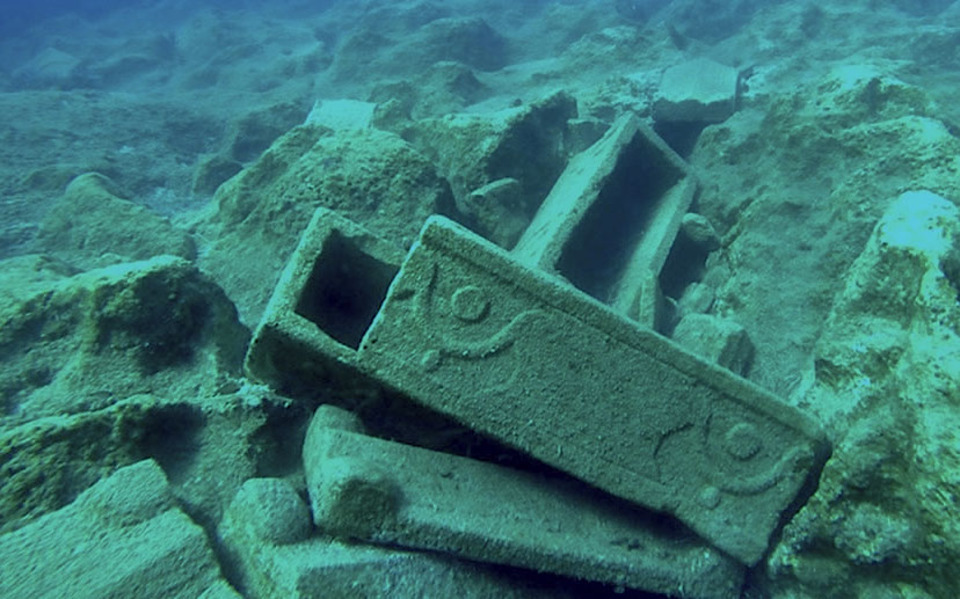
As one of the most touristic destinations in the Mediterranean, Greece remains unknown for its underwater treasures. Being an archipelago with thousands of kilometers of coastline and a rich background of nautical history. Surprisingly, until 2020, when a new law was enacted, recreational diving was prohibited in many areas with fear of unique archaeology and antiquities been plundered. The new laws has opened up the gates to numerous wrecks, submerged archaeological sites and unique marine sanctuaries. But remember, if you find anything that resembles an artifact or even the fragment of one, you can look at it but leave it behind. Discover with us the top destinations for Scuba Diving in Greece.

Greece is also the ideal destination when it comes to diving conditions, calm and crystal clear waters with an average visibility of 20 to 30 meters. In addition, the temperature of the water varies between 20ºC and 26ºC during the diving season (April-October).

Let us recommend you some our of favorite sites around the country, that could easily be on the top list of Mediterranean dive sites.

1. ALONNISOS and the “Parthenon of Shipwrecks”

Alonnisos Marine National Park is the first of its kind in Greece and the largest European marine protected area. It was created to protect the Mediterranean monk seal and its natural habitat, along with significant archaeological discoveries.

It also houses the first Greek underwater museum, the Peristera shipwreck, which opened to diving enthusiasts in 2019. This ancient merchant ship sunk 2.500 years ago due to the bad weather while carrying four thousand wine amphorae. This discovery had a great impact on the understanding of archaeologists, since it is the largest vessel of its time ever found.

2. Elephant’s Cave (CRETE)

If you found yourself in the Drepano area of Akrotiri you must dive Elephant’s Cave. The cave features beautiful white and red stalactites and stalagmites. Further into the cave, you will find fossilized remains (vertebrae, teeth and tusks) of extinct elephants from the Ice Age. And if you’re in luck, maybe you could see a monk seal.

3. HMHS Britannic wreck

Better known as the Titanic’s sister ship. Britannic was a hospital ship in WWI until it sank in 1916 after hitting a mine deployed by a German submarine. Today, it rests at 100m depth close to Kea Island on the Aegean Sea, and can only be visited by technical divers with the right permits. The spectacular 270 meter wreck was discovered in 1975 by Jacques Cousteau and it is the largest intact passenger ship on the seabed.

4. Navarino Bay and Proti Island

Navarino Bay, famous for the nautical battle during the War of Independence, houses a variety of wrecks with interesting artifacts. This is why the Greek government is planning to open one of the first two Underwater archeological parks in the Bay.

Along this coastline, where the loggerhead turtles return every year to lay their eggs, we find the island of Proti, an unspoiled diving paradise with stunning reefs, rock formations, canyons and caverns filled with colorful sponges and exquisite marine life. There is something special about this place that goes unnoticed by most. It is a hidden gem that is worth exploring.

5. Zakynthos

The turquoise waters of Zakynthos make this Ionian Island a famous holiday destination in the Mediterranean. It is also ideally suited for divers of all levels. Gerakas beach, known as the breeding ground for endangered loggerhead turtles, makes the Ionian Sea and above all Zakynthos a paradise for sea turtles. Be sure to dive along the coast of Keri, where you can find multiple dive sites, from cave to steep walls, with a wide array of marine life and clear waters.